Free fraction teaching · Grades 3–5
Find the next step in their fraction thinking.
A full lesson for tomorrow. A short intervention for today. Materials, models and teacher responses that keep the whole in view.
Free to use. No sign-up. Student pages and teacher answers stay separate.
Start with a question
Same amount. Different names.
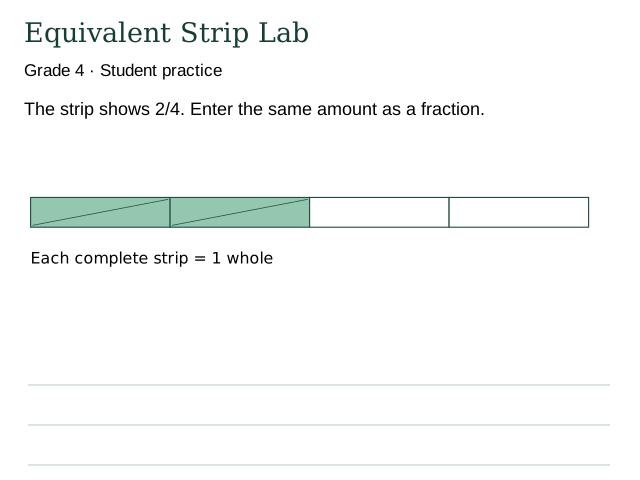
Both strips have the same-sized whole.
What changed when each third became two sixths?
What evidence shows that the amount stayed the same?
Try the fraction strip model →Ready for the situation you have today
See all three routinesA 12-minute number-line rescue
For a teacher working with a learner or small group after a number-line error.
Open the sequence & materials →A ready-to-run fraction substitute lesson
For a substitute covering a class that has already met halves, thirds and fourths.
Open the sequence & materials →Build, check and explain: fraction model partners
For two learners sharing one device during a maths centre or supported home practice.
Open the sequence & materials →What does your group need?
Choose a starting point.
Teach a complete lesson
30 lessons with core, support and challenge practice, a presentation, PDFs and a diagnostic teaching companion.
Respond to a specific error
12 targeted interventions. Diagnose the misunderstanding, model a response, then check whether it transfers.
Plan the next few lessons
4 unit plans with parallel pre- and post-assessments, anonymous group records and a next lesson for each need.
Make the reasoning visible
Move points on a number line, compare fraction strips and build area products. Keep or print the model you make.
Ready for your next lesson
View all 30 lessons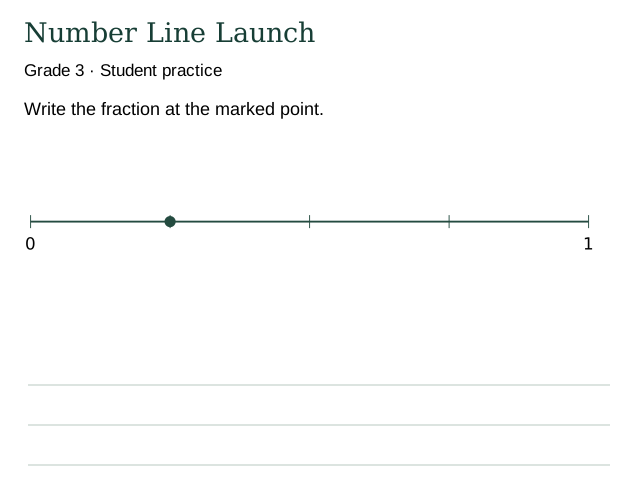
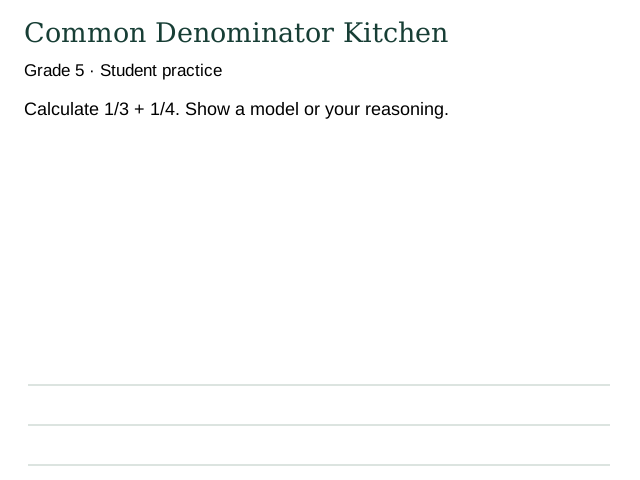
Common Denominator Kitchen
Add unlike fractions by renaming both ingredients in common units.
Open lessonTeach from what you notice
Diagnose. Model. Check again.
Ask a short question before teaching. Match the response to a concrete model. Use an exit question to choose between more support, independent practice and a new challenge.
See a number-line intervention →- Listen for the unit. Is the student naming the whole, an equal interval or a number of groups?
- Make the error visible. Compare a correct example with a useful counterexample.
- Look for transfer. Change the representation or context and ask for an explanation.